

“England is the most class-ridden country under the sun. It is a land of snobbery and privilege, ruled largely by the old and silly.” — George Orwell
Note: I keep as much of this Substack free as I can, but writing takes time and energy and if you’re able to subscribe here at one of the paid tiers and support my work you’d be doing me a solid. If you’re unable to afford a paid subscription, consider subscribing for free or send me a message and I’ll gladly comp your subscription.
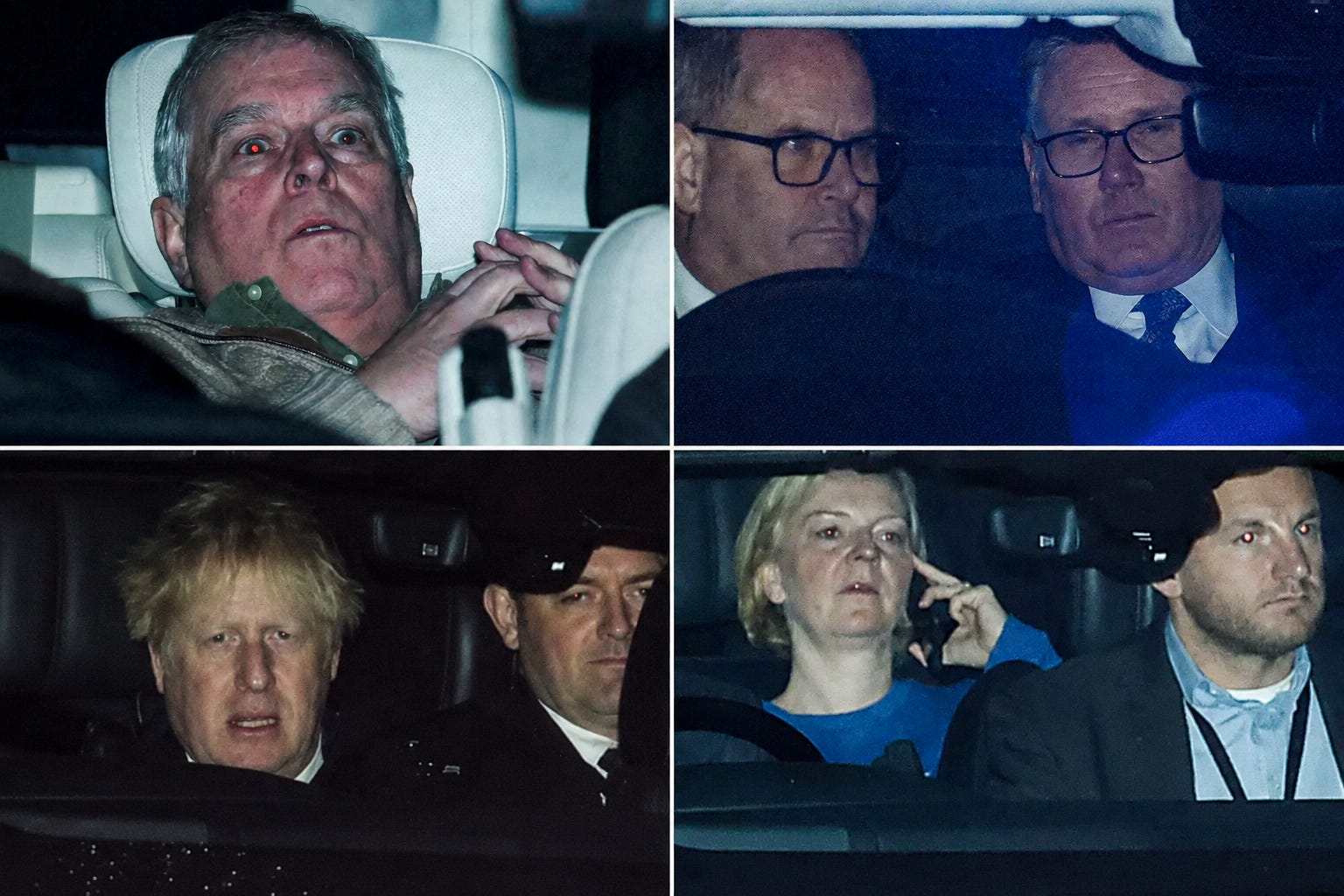
There is a distinctly British genre of image that is instantly recognizable the moment you see it, and if you’ve found your way here you already know exactly what I mean. Said image generally involves a politician, celebrity, or public figure seated in the back of a car. The face is instantly familiar but, dimly lit by the violent ambush of a flash bulb, looks unusually pale and eldritch, the eyeballs peering out at you with the demonic hue of an underworld creature who only drinks blood. The expression is abject, like that of a murderer’s mugshot or the death mask of some ancient despot that’s been weathered and degraded by the passage of centuries.
While every nation on earth has famous people who take bad photos, and plenty have paparazzi of one kind or another, only Britain has produced an uncanny style of portraiture that specifically involves celebrities and national leaders looking grey and beleaguered in the back seats of cars. On its face, you might assume such images are unique to the social media age. In fact, the genre has been alive and kicking for decades and very much predates the more recent meme-ification of fame.
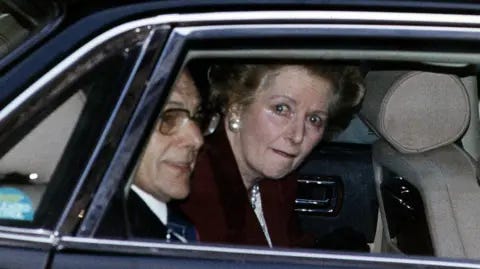
There has always been a garish and tabloid quality to these photos and, indeed, the greasiest people in the British Isles are probably paid handsomely by rags like the Sun and Daily Mail to capture them. But they also express an irreverence towards entrenched wealth and institutional power that is hard not to admire and, in doing so, speak to something more fundamental in the British cultural imagination.
An American who watches an interview with a British politician or cabinet minister for the first time will be instantly struck, and perhaps even a little put off, by how probing and hostile it’s liable to be. As a rule, Beltway journalists or TV anchors who sit down with US presidents tend to be much more deferential than their Westminster equivalents and are sometimes openly sycophantic. When Congress meets to watch the president’s annual State of the Union address, there is usually a spirit of bipartisan pomp to the affair and it’s perfectly normal for members from both factions to rise and applaud. The House of Commons, by contrast, stages a ritual sacrifice of the prime minister every week that regularly sees even backbenchers from the government side stand up to grill their own party leader.
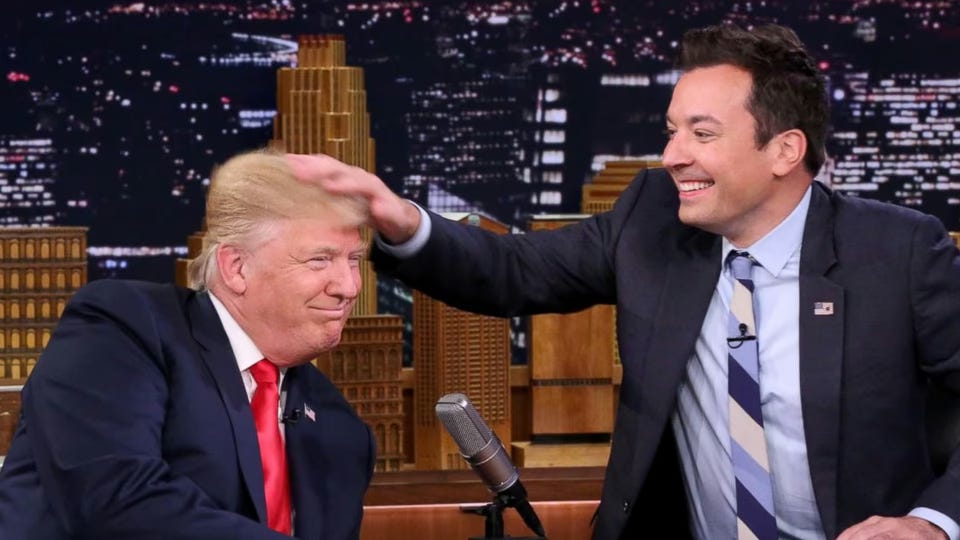
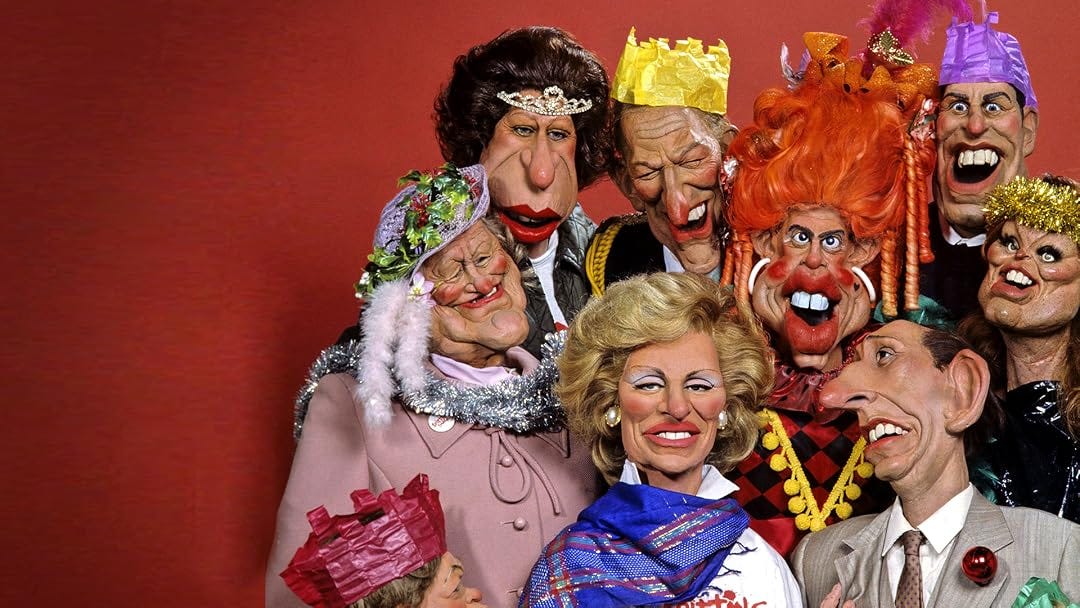
In America, late night comedians perform limp parodies of political elites and issue cloyingly earnest pleas for bipartisanship. In Britain, their equivalents have spent the past half century or more acerbically ridiculing every part of their country’s political and cultural establishment — the gentry, the clergy, the monarchy, the civil service — while caricaturing powerful people as grotesque monsters. Where British irreverence has given us the likes of Private Eye, Monty Python’s Flying Circus, Yes Minister, and Spitting Image, American deference has given us SNL and The Daily Show. One satirical tradition finds its transgressive edge by portraying elites as dunces or doofuses —sometimes with an air of implicit affection — and the harshest form of censure it can conceive is declaring someone unworthy of their office. The other gleefully profanes every person or institution it touches. Where Americans merely lampoon, Britons quite literally take the piss.
The contrast is puzzling when you reflect on what a deeply unequal society Britain continues to be. This is a country that has hierarchy in its bones: one with a dynastic head of state who wears bejewelled robes, lives in a palace, and has their authority consecrated through medieval rites; a place where an unelected chamber called the “House of Lords” can hold up duly passed legislation, there is a designated state church, and even revolution finally yielded a constitutional monarchy rather than a republic. In no other English-speaking democracy do the most subtle variations of accent or speech retain such specific class connotations.
America’s self-image is in many ways the opposite of Britain’s. On paper at least, it is a Jeffersonian republic where equality and individual freedom are constitutionally-guaranteed and institutional authority flows upwards from the people. The old cliché that anyone can make it in America is obviously untrue but it remains a powerful civic narrative with wide social buy-in. Both countries, needless to say, boast decadent ruling classes and are profoundly unequal. But where Britain’s official culture openly codifies and celebrates hierarchy, the American ethos prefers to mask it with ideology. The upshot, ironically, is that the country founded by rebellious colonists is more reverential toward its political and economic elites than the one still ruled by a king.
We should not, of course, get too carried away here. The irreverence conveyed by candid backseat mugshots might be preferable to the American culture of deference but (with the notable exception of the NHS) the UK is hardly light years ahead when it comes to real equality. Societies accommodate and rationalize their unjust social arrangements in different ways, and there’s probably a case to be made that British transgression has been more of a release valve for populist sentiment than the expression of a genuine counterculture. Still, between the pretentious liturgy of your average State of the Union address and the fluorescent humiliation of Keir Starmer or Prince Andrew immortalized on celluloid, I would take the latter any day.
It should be possible to coat a windshield such that this doesn’t work
Don’t forget about Prince Philip. Couldn’t remember his name so I googled “British royal who looks like a corpse in backseat” and it was on the first page of image results.