

I keep as much of this Substack free as I can, but as a freelancer I depend on the income I receive from writing so please consider subscribing at one of the paid tiers if you can afford to contribute. Those who do so will get instant access to every paywalled piece, including those from the archives.
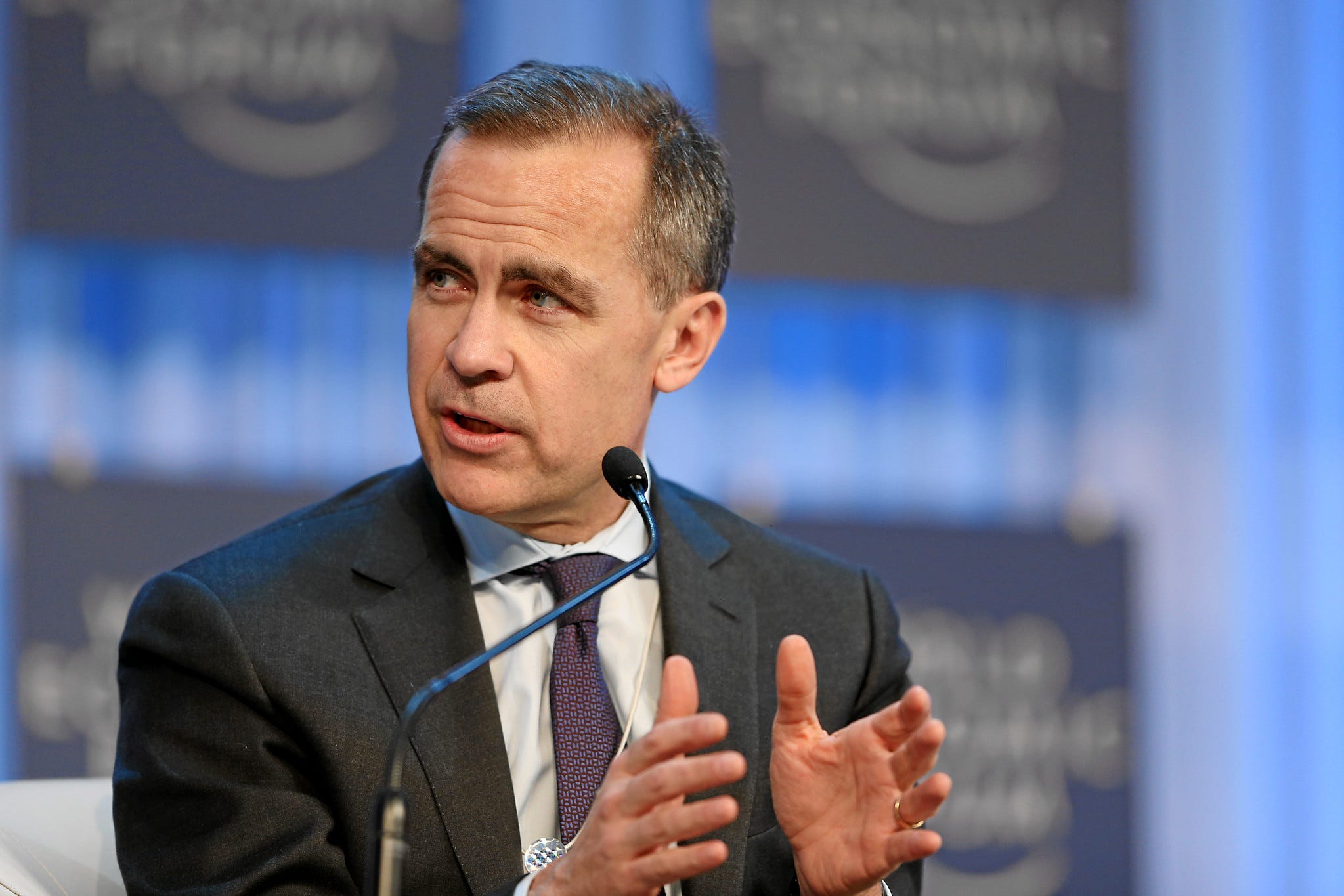
Late last month, Canadian prime minister Mark Carney announced the creation of a “people’s fund” in the mould of Norway’s sovereign wealth fund, explaining it like this:
A sovereign wealth fund is essentially a national savings and investment account. It's designed to grow wealth for future generations of Canadians. Many countries, many countries that are blessed with natural resources, like Norway, have sovereign wealth funds. Canada hasn't had one until now. The new Canada Strong Fund will give all Canadians a direct stake in building Canada strong.
If you haven’t heard of Norway’s sovereign wealth fund, the basic background is this. In the late 1960s, Norwegians discovered they boasted some of the world’s greatest offshore oil reserves. Beginning in the 1990s, the state started putting a share of the revenues into a giant public fund the country could draw on in the event it needed to and quite explicitly planning ahead for a future in which it inevitably transitions from fossil fuels. But as I explain in my latest piece for the Toronto Star, there was ultimately something more than hard-headed North European pragmatism at work here:
Norway, just like Canada, boasts vast oil reserves and, in the early 1990s, its government decided to start putting a share of the revenues into a fund that would be publicly-owned and controlled. This was partly because it recognized that oil is a finite resource and that Norwegians should probably start preparing for the day it inevitably runs out. But the plan also expressed the egalitarian ambitions of Norway’s social democratic Labour government. If a country is awash with resource wealth, the logic ran, then a share of it should necessarily belong to every citizen and be readily available for socially-useful public investment in periods of economic transition or instability. The result? Today the fund is worth roughly $3 trillion, is still growing, and will be available to finance Norway’s eventual shift away from fossil fuels.
What the Carney government is proposing, as I further explain, is essentially the opposite of this. I won’t quote further from the piece since you can just as easily read it for yourself. But there’s a broader story here about the profound dissonance between how Carney is actually governing and the story he’s telling Canadians to sell his agenda.
Across multiple fronts, this is the most right wing government Canada has had since at least the 1990s. Its agenda is one of massive public sector cuts, corporate subsidies, deregulation, and privatization (the Star’s Althia Raj, incidentally, recently examined these aspects of the government’s program in greater detail). But Mark Carney is quite visibly offering a very different public narrative about all this. Since taking office before last year’s election, he’s seized on a left-tinted language of economic nationalism. He’s pursued deregulation and corporate subsidies while calling this an “industrial strategy.” He’s invoked postwar imagery of mass public housing construction but his government has not adopted anything even faintly resembling the housing program enacted by the 1945 government of William Mackenzie King.
I didn’t have time to get into this in my Star piece, but something similar is also happening in the realm of foreign affairs. What many people heard in Carney’s Davos speech was a stirring call for a new spirit of progressive internationalism in the age of Trump. But, as I wrote back in January, this is not in fact what Carney was really saying at all: the speech being largely conservative in its implications.
Interpreting the Carney Doctrine

Mark Carney’s speech at the World Economic Forum in Davos this week has already generated a flurry of media commentary, the vast majority of which — at least from what I’ve seen — has ranged from positive to gushing. Given the speech’s content, this deluge is unsurprising and, to some extent, it’s also perfectly justified. For as long as most of us have…
The disjuncture between Carney’s actions and his words is, in my view, about more than just the hyperbole or narrative finessing through which leaders and governments sometimes seek to represent themselves to the democratic public. As I argued last month, there is something of a Straussian quality to the way Carney conducts himself — by which I mean he often seems, simultaneously, to be saying one thing to a mass audience and something quite different to a far narrower and more elite one.
Here, his supposed “sovereign wealth fund” is merely the most latest example.
You can read my full piece in the Star here.
Outstanding work Luke! I am becoming a paying customer today. I have been saying that Carney should be joining in with Spains Sanchez calling out Israel for its genocide...sanctioning it rather than Iran. And I have been saying he should not teaming up with those European leaders that want to arm up against Russia rather than spending Canadian money on things that would actually make us more secure.
I was, in a previous existence, wrangled into involvement with the exercise known as GFANZ. The more I became involved, the more it became apparent that the game was structured to funnel public money to private corporations, and above all, to the finance industry under the guise of saving the planet.
Needless to say, GFANZ essentially vanished once shit got real and the subsidies to various players dried up. Its demise was foretold from the start, by many more than my minor player ass.
Those of you familiar with Carney’s Greenwashed self-serve piety are likely not surprised by his recent elevation of Jonathan Wilkinson to EU Ambassador. I’ve lost track of the colloquial titles at this point. Is Carney the King of Greenwash and Wilkinson the “Minister” or Duke, or vice versa. Either way, there’s a massive infrastructure built upon this scam.
SWFs can be good things if they are structured to take accumulated excess value and use it for public benefit. If the SWF is a vehicle to drain public wealth and give it to corporations… that’s a different game. The gloss of nobility wears off the latter pretty quickly once folks figure out what the reality is.
All the best, Luke. Great work.