

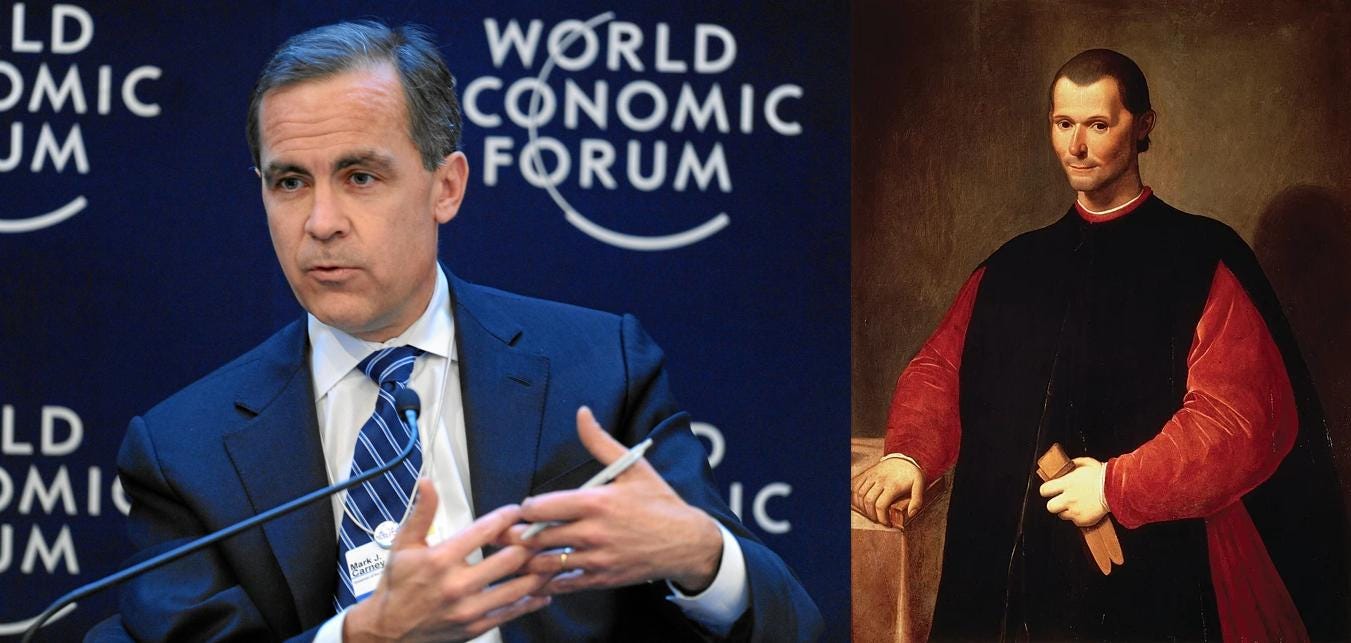
My first encounter with Straussianism, perhaps appropriately, came while reading Machiavelli as a second year undergraduate.
“Straussianism,” for those unfamiliar, refers to a broad camp of political theorists who draw on the thought of the late German émigré philosopher Leo Strauss. Many (though by no means all) of them are politically conservative and some have even been active in right wing politics. The exact nature of the relationship between Strauss’s thought and Straussian conservatism has been fiercely debated and is well beyond our remit here. Regardless, the main thing to know about Straussians is that they champion an esoteric approach to reading and interpreting great texts like The Republic. In plainer language, you might say they look for hidden meaning: forensically parsing subtext; peeling back artifice; identifying obvious gaps in a writer’s arguments and wondering (sometimes justifiably) whether they might be intentional.
In light of strong interest, I’ve decided to extend last month’s discounted subscription offer. Until the end of April, that means you take out a full year’s subscription for just 50% the regular cost. To subscribe at the discounted rate and support my work you can click here or alternatively subscribe for free and still get the regular free posts sent right to your inbox.
In reading The Prince, for example, I learned it could be useful to ask questions like why Machiavelli had chosen not to mention Christ in a list of “armed prophets” alongside Moses, Theseus, Cyrus the Great of Persia, and Romulus (the mythical founder and first king of Rome). Was he in fact making a cryptic claim about the political fecklessness of Christian morality here? In cases like these, the Straussian approach can be genuinely useful and yield real insight. Indeed, there’s no inherent reason why such an interpretive method should be conservatively-coded at all.
Straussianism often intersects with right wing politics, however, because many of its disciples also believe that major texts in the philosophical cannon were intentionally instilled with multiple layers of meaning by their authors — the deepest of which are, by design, only accessible to a tiny elect capable of identifying and grasping them.
