

Note: I keep as much of this Substack free as I can, but writing takes time and energy and if you’re able to subscribe here at one of the paid tiers and support my work you’d be doing me a solid. If you’re unable to afford a paid subscription, consider subscribing for free or send me a message and I’ll gladly comp your subscription.
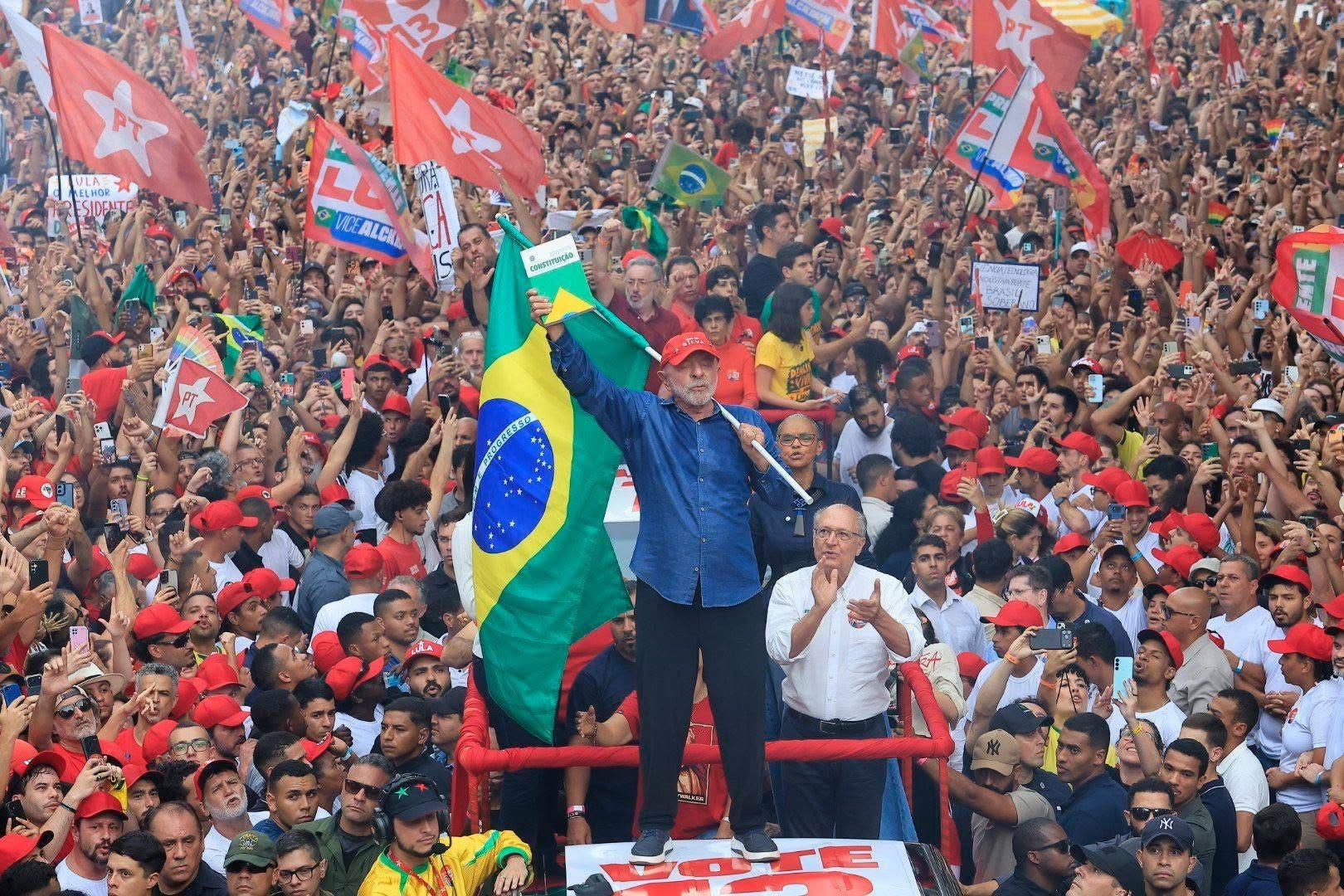
Lula da Silva’s stunning victory in the second round of presidential voting last weekend was nothing short of a miracle. It’s the first time in the history of modern Brazilian democracy, in fact, that a candidate who placed second in the initial round has ever gone on to win — a testament to the remarkable mass mobilization the Lula camp achieved in the campaign’s final weeks. As one commentator notes here, this really was decisive in driving turnout and brought huge numbers of people to the polls who had sat things out in the first round.
Among other things, it’s been both notable and encouraging to see how much interest his campaign garnered from people elsewhere, particularly in the United States. But amid all the celebrations today, one influential commentator has characteristically demurred.
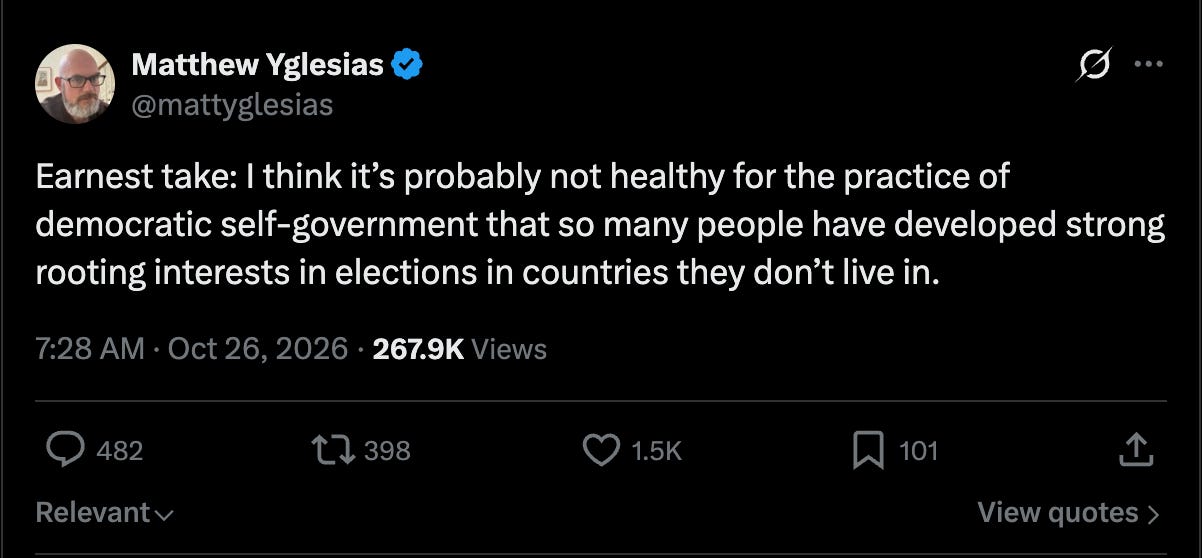
There’s something almost charmingly quaint about this attitude. And if this were the 19th century, and the world still heavily consisted of traditional nation-states with localized identities there might even be something to it. The thing is, we no longer live in such a world and, if people now show increased concern for what happens in other countries, that’s partly a natural outgrowth of societies becoming more cosmopolitan and interconnected.
It also reflects the fact that all of us unavoidably have a stake in who governs the world’s biggest and most important countries. That’s true of the United States and it’s obviously true of Brazil as well. A nation of more than 200 million people, Brazil is both one of the planet’s largest democracies and home to a majority of the Amazon rainforest. What happens there will unavoidably have implications for all kinds of things relevant to people elsewhere: among them the future of global governance, the health of global democracy itself, and whether or not the planet remains habitable to future generations at all. A Bolsonaro victory would also have emboldened the far right in other places, so all of us had a more immediate interest in seeing Bolsonarismo’s defeat.
One reason is that the character of the far right itself has become increasingly global. From Brazil and America to Hungary, France, and beyond, reactionaries around the world have spent the last decade forging new alliances and working towards their common authoritarian goals. In light of this, cooperation between democratic forces everywhere is all the more vital. Internationalism is a laudable and high-minded value, but it happens to be a pragmatic one too. Brazil’s election result represents a real blow to authoritarian forces everywhere — and given the extent to which it sought to put its thumb on the scales to Trump’s administration in particular.
Regardless, the indifferent posture being endorsed by Yglesias here is neither coherent nor tenable in the 21st century. We might all be citizens of nation states but, to a greater extent than ever before, our fates are clearly bound together and what happens in the decades ahead will largely depend on our ability to plan and cooperate across national divides. Inevitably, that’s going to mean seeing other countries’ politics as local theatres of a wider war in which we all have a stake. Because they are and we do. Viva Lula.
Yglesias is a fine example of the maxim that you go right as you get older. Fortunately he is bucking the trend as now people are moving left as they survey the ruins of their hopes and governments brought about by toxic Neo liberalism. Brasil, Serbia ,Albania, France and soon the mid terms . I am feeling happier.