

The following was originally published in Jacobin in April 2024.
Earlier this month, a columnist for the right-wing UK Telegraph penned an op-ed entitled “Gen Z are an employer’s nightmare – my twenties put them to shame.” On its face, the article itself is pretty unremarkable: the usual mashup of post-pandemic employer grievances about indolent workers and paint-by-numbers complaints about Kids Today. There’s even a generic stock image of a reclining Gen Zer drinking out of a mason jar with a straw while talking on their cellphone to go with it.
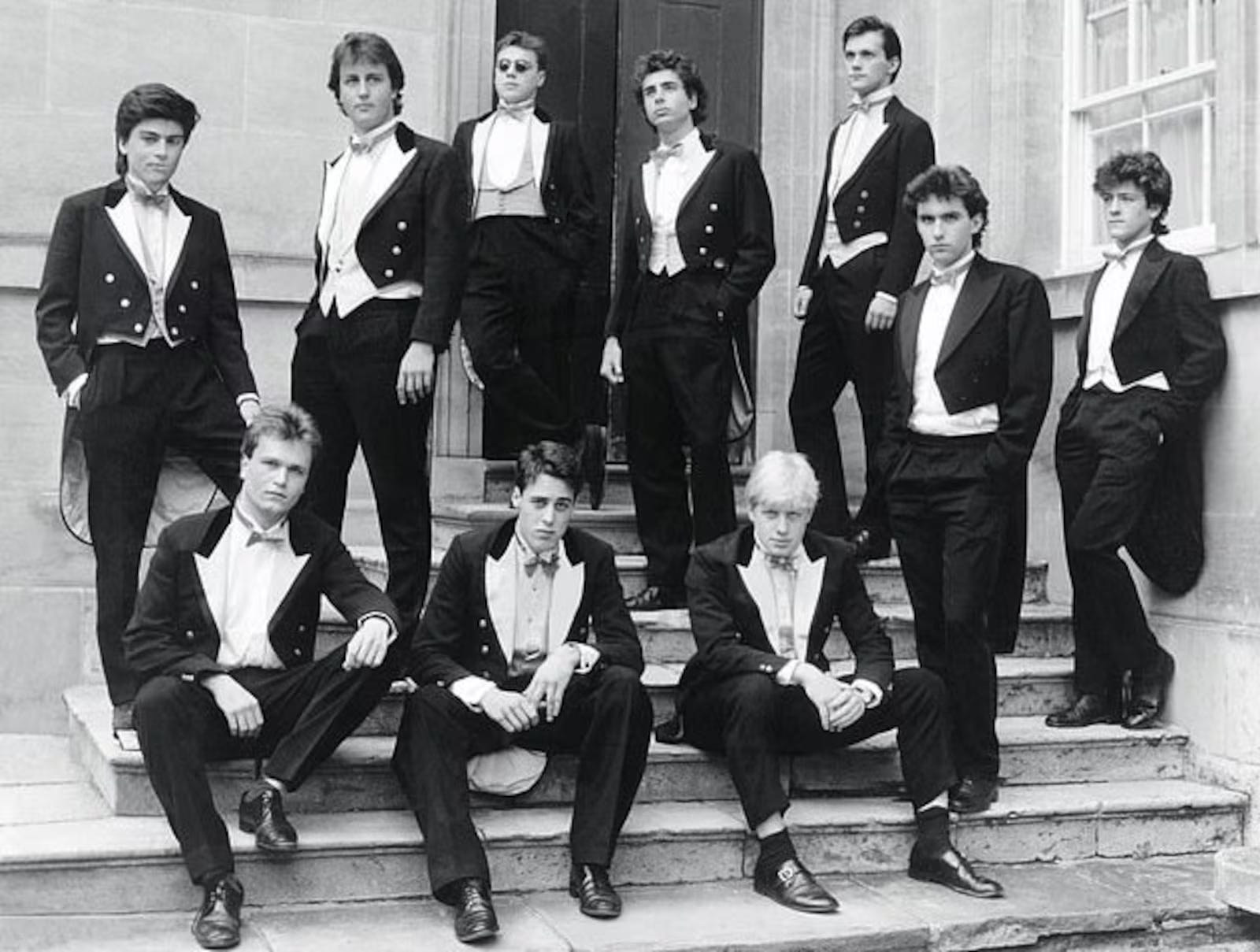
Subtlety doesn’t tend to feature much in this genre of op-ed, but if I told you the author of the piece in question was the daughter of a baron educated at Eton College with the unimprovable name “Sophia Money-Coutts” you’d probably think I was making a rather lazy and heavy-handed attempt at satire. If the name Coutts sounds familiar, that’s probably because it’s also the name of one of the world’s oldest and most successful banks. Ms Coutts’s father — whose full title is Crispin James Alan Nevill Money-Coutts, 9th Baron Latymer — is a descendent of its founder, Thomas Coutts, whose own father, John Coutts, held the title Lord Provost of Edinburgh in the 1740s and received an inheritance that would be worth roughly £5.5 million today adjusted for inflation. Her maternal grandfather, William Francis Deedes, was a baron, Tory cabinet minister, and editor of none other than the Telegraph. Her alma mater Wycombe Abbey, a private boarding school for young women aged eleven to eighteen, currently costs £15,900 per term (or £47,700 a year).
In describing her own working life, the author doesn’t exactly strengthen her case either. Beginning with unspecified “stints on shop floors” (whatever it was she was doing, we can safely assume it didn’t involve scrubbing said floors) and a “spell in a Kennington estate agency,” Coutts says she next worked as an assistant on the Features desk at the Evening Standard.
“To an almost pathetic extent,” she writes, “I did everything that was asked of me. I made forty-two billion cups of tea. I bought my boss’s tights. I trialed Beyoncé’s maple syrup diet and Madonna’s cardio regime. I stayed late and came in early. Extremely early, some days. Once at around 4 a.m., having spent the night loitering in a West End club, trying to winkle out a quote from the son of a recently disgraced MP (he didn’t give me one).”
Needless to say, it’s a little absurd to see yet another cookie-cutter screed about entitled youngsters who refuse to hustle penned by someone with this pedigree. True, said youngsters may never have “trialed Beyoncé’s maple syrup diet,” but these days plenty of them are definitely working a lot harder for a lot less. Given its source, the whole thing basically reads as a burlesque parody. But it also begs the question of why someone like Coutts even feels the need to write such a piece in the first place.
A column like this one is what happens when the embedded privilege of the upper classes collides with the hegemonic ideology of liberal meritocracy. In earlier eras, those raised against a backdrop of inherited wealth or landed title didn’t tend to bother with elaborate liturgies of self-justification because the legitimacy of their stations was something they took for granted. Today, however, it is no longer enough to simply have wealth or class privilege: you are, ostensibly at least, supposed to earn those things as well, with some combination of personal brilliance and grit (real or otherwise) generally being the designated means.
It’s tempting in this case to write off the obvious cognitive dissonance at play as symptomatic of a specific national pathology. Britain’s Brahmin class is generally more neurotic and less self-assured than its equivalents elsewhere, seeming at once deeply attached to the constellation of symbols and institutions that define it — the monarchy, the private boarding school, etc. — and perpetually insecure about the decidedly non-meritorious and quasi-feudal order they exist to maintain. (Scan Coutts’s back catalog at the Telegraph, in fact, and you’ll duly find a trove of op-eds grappling anxiously with the vicissitudes of high status.)


But however distinctly British this particular case might seem, the obvious contradiction at its centre — between the liberal narrative of equal opportunity and the realities of modern capitalist inequality — ultimately has a wider valence. Notwithstanding the official story most 21st century liberal democracies tell about themselves — that every citizen is functionally equal, that status is always earned, that differences in outcome mostly reflect differences in effort or talent, that class society is an anachronism long ago consigned to history’s dustbin, etc. — it remains the case that where you start out in life still very often determines where you end up. Those born into wealth and status almost invariably keep those things regardless of what they produce or how hard they work, just as people who grow up without them are much less likely to attain even basic economic security (let alone prosperity or success).
In one sense at least, the moneyed elite’s relationship to class is today defined by the extent of its quiescence toward these contemporary fictions. A small few among the ultrarich or high born, usually the most right wing, still explicitly cleave to an older idea of social caste that pays no deference to the egalitarian shibboleths of liberal modernity. A much larger number, however, now seems hell-bent on embracing some version of them as a means of legitimation. Those implicated in 2019’s blockbuster college admissions scandal — to give an obvious example — weren’t working-class families trying to give their children a leg up by cheating, but wealthy parents desperate to see their offspring obtain the credentials necessary to give their privilege a sheen of moral desert in accordance with the reigning meritocratic script.
To some extent, then, this schizoid posture is just a psychological projection of the contradiction at the heart of modern liberal societies, in which our formally embraced notions of equality are remain persistently in friction with the realities of class and hierarchy. But it can also, more optimistically, be taken as a sign that the egalitarian potential of the democratic age, despite the political and ideological regress of the past half century, is still with us.
Thanks to neoliberalism, inequality in many societies has significantly increased since the 1980s. And yet, even amid this new Gilded Age, the ambient pull of democratic ideas apparently remains strong enough that many at the top of the pyramid still feel compelled to pretend their presence there is something other than an accident of birth.
The rich are not ok. The difference is that make us live their trauma too