
NOTE: I keep as much of this Substack free as I can, but as a freelancer I depend on the income I receive from writing so please consider subscribing for as little as $5 a month if you can afford to contribute. Those who do so will get instant access to every paywalled piece in full, including those from the archives.
I can’t quite remember when it was, but I once watched a TVO panel about housing policy. The details aren’t hugely important, but part way through one of the more conservatively-minded panelists made a derisive comment in response to someone else’s fairly straightforward case for the building of new non-profit public housing (“Oh, so you want a future where millions of people live in units owned by the government?” or something to that effect).
It didn’t matter, evidently, that public housing has both a long lineage and a pretty good track record in Canada — or did, at any rate, before Jean Chrétien and Paul Martin killed the National Housing Program back in the 1990s. It didn’t matter that Canada is in the midst of a massive housing crisis and that non-profit houses and rental units are by definition more affordable than what’s currently on offer from an overpriced and overly financialized housing market. The idea of the state involving itself in the construction or provision of housing was just inherently uncouth, full stop.
I’ve been recalling this little episode over the past few days while looking on at events in the UK. For context, the British government recently asked supermarket chains to cap rising prices on essential foodstuffs amid continued inflation. I say “asked” because what we’re talking about here is something completely voluntary rather than the imposition of actual price controls (Scotland’s SNP government, for what it’s worth, is doing just that). The government, in fact, has apparently even tried to nudge grocery conglomerates by offering them some regulatory cuts in return.
But even this, it seems, is a bridge too far for Britain’s market ideologues. Here’s just a sample of the reaction so far:
“Completely preposterous…My advice is that the Government should reduce some of the tax and regulatory burden and free us up in a very competitive market.” — Stuart Machin, chief executive of Marks & Spencer
“I think the whole idea is the stuff of nonsense and it will never fly. This smacks of state control, it’s idiotic, it’s dangerous, and it’ll never work. [There is] no better system than a free market economy.” — Lord Stuart Rose, former chairman of Ocado and Conservative peer
“Rather than introduce 1970s style price controls and trying to force retailers to sell goods at a loss, the government must focus on how it will reduce the public policy costs which are pushing up food prices in the first place.” — Helen Dickinson, the chief executive of the British Retail Consortium
“Lost for words. Never thought I’d see a British govt trying to set food prices. If there is one highly competitive sector it is food retailing. Do we really want to live in a country where the state sets these prices?” — Paul Johnson, Provost at The Queen's College, Oxford and former director of the Institute for Fiscal Studies
“We did have price caps and purchasing caps during the Second World War. And of course Stalin and his successors were pretty good at capping prices and that’s how they ran the economy. But in general, outside of wartime or a state planned economy, finding ways in which you can cap the price of ordinary goods…in general people have not done it because if you try and do it it all goes wrong.” — Ed Balls, former MP and Labour Shadow Chancellor
It’s quite remarkable, really.
Britain is a wealthy country where there’s more than enough for everyone to eat, yet millions are going hungry and food bank usage is reportedly up 45 percent relative to pre-pandemic levels. For those quoted above, however, the real crisis is the notion that the state might intervene. The sheer incredulousness of these reactions is, I think, telling in and of itself. The market system may be failing to meet a basic need here but acknowledging this, let alone doing anything about it, is state-ism, Stalinism, an attack on freedom itself. In Canada, incidentally, NDP leader Avi Lewis’s proposal for publicly-owned non-profit grocery stores has been greeted with a similarly doctrinarian reaction from the same crowd.
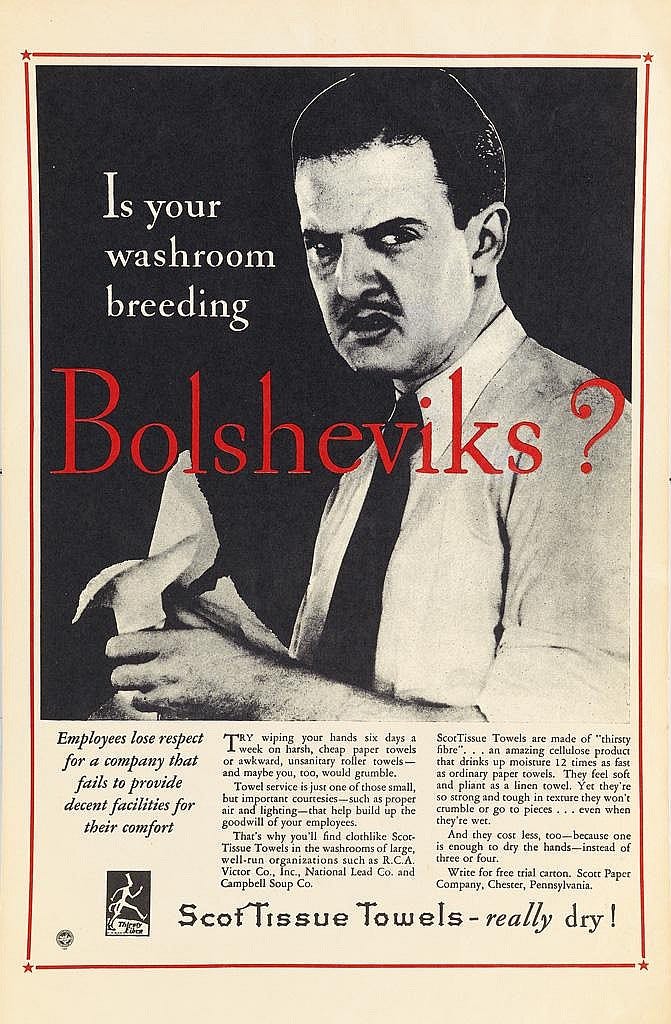
This species of market dogma has its roots in old Cold War hysteria and in some ways reaches back even further (Ayn Rand, for example, thought Roosevelt’s New Deal represented the creeping encroachment of communism in the United States). Here, healthy scepticism about the possibility of state overreach was superseded by the far more radical belief that the market system is so foundational as a bulwark of freedom that constraining or limiting it in any way poses an existential risk. Even when markets are failing to provide something quite fundamental, this thinking goes, having the state — even the democratic state — intervene will inevitably yield a worse outcome.
It’s a view that stays fixed regardless of how the world changes and what actual evidence might say to the contrary. Here, for example, is how Ronald Reagan — then still in his Hollywood era — made the case against socialized medicine in a now infamous 1961 propaganda recording cut for the American Medical Association:
One of the traditional methods of imposing statism or socialism on a people has been by way of medicine. It’s very easy to disguise a medical program as a humanitarian project, most people are a little reluctant to oppose anything that suggests medical care for people who possibly can’t afford it…in our country under our free-enterprise system we have seen medicine reach the greatest heights that it has in any country in the world. Today, the relationship between patient and doctor in this country is something to be envied any place. The privacy, the care that is given to a person, the right to choose a doctor, the right to go from one doctor to the other. But let’s also look from the other side…The doctor begins to lose freedoms…From here it’s a short step to all the rest of socialism, to determining his pay, and pretty soon your son won’t decide when he’s in school, where he will go, or what he will do for a living. He will wait for the government to tell him where he will go to work and what he will do.
Needless to say, countries throughout the world have established systems of socialized medicine without anything even faintly resembling Reagan’s dire warnings coming to pass (I’m incidentally fortunate to live in Canada and would take its model of nationalized health insurance over the healthcare dystopia that exists south of the border). The same can be said about price controls, public housing, rent caps, and plenty else as well. Just look at what governments are doing right now in places like Mexico and Spain.
Once again, to a particular species of market dogmatist this stuff simply doesn’t matter. Paying $3000 a month to a private landlord for a 450 square foot box in the sky is freedom but paying half that amount to a publicly-owned rental company for more space is communist tyranny. The state providing everyone with health insurance will end in death panels but leaving profiteers to their own devices guarantees “choice.” And between letting people go hungry in the richest societies on earth and reforming a system that is visibly failing, the former is somehow deemed the more desirable option.
Pathetic. It's not hard to find examples of price controls in Europe at the moment, here for example in Croatia: https://www.croatiaweek.com/croatian-government-imposes-price-caps-on-70-essential-goods/. The refusal to even consider something like that appertains to fundamentalistic religion, not to rational debate.
I would love it posed to these people what level of starvation amongst the population is permissible so long as we retain a Free Market system with continuous profit incentives. Unfortunately I'd guess they would all agree any level is acceptable if the alternative were to cut down on their chance to extract their profits.