
If you read me here regularly, you may have noticed a relative dearth of pieces over the last few weeks. This is partly down to work on other projects — I’m currently juggling three different manuscripts (of which more soon…). But the truth is I reached a point in early August when the words were no longer coming as they usually do. I don’t mean literally, of course — in fact, this period of relative stasis yielded many unfinished drafts. But the ineffable spark that produces good prose simply wasn’t there. It was incredibly frustrating, because I’m often able to formulate ideas and pump them out with ease, all while recording my podcast every week, doing periodic interviews, and continuing to work through developing ideas while hammering away at my various book projects.
I am incredibly fortunate to be able to write for a living and earn my keep in the realm of ideas. Not having had a job with regular 9-5 hours for several years now, though, I’ve sometimes found it hard to establish anything but the most porous borders around my work. I'm not really talking about work/life balance here, though that’s obviously part of it. In my line of work, the bigger problem is that anything that interests me has the potential to be turned into a piece of writing or — if you’ll excuse my use of such an insufferable word — “content.” To wit: I can be watching the Blue Jays, playing video games, or reading James Joyce and there is now a permanent part of my brain which instinctively asks “Can I wring an essay, article, or podcast out of this?”.
Either way, the upshot of all this is that I’ve been terrible at taking real time off. Towards the end of August, I finally slowed down a bit and the act of writing already feels more like it’s supposed to. And, once I’ve emerged from the journey ahead of me, I expect to be in a much better headspace.
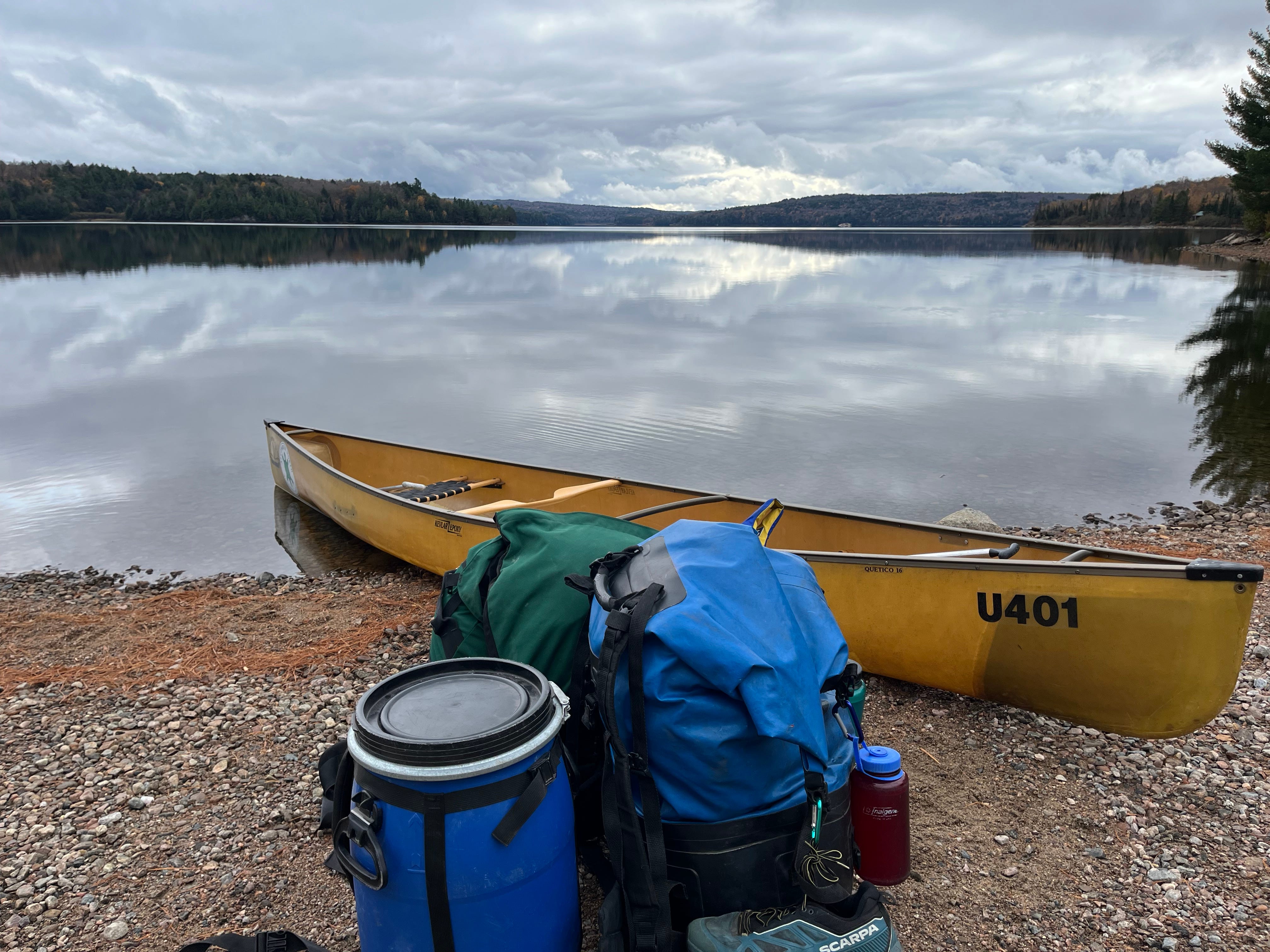
Every year — as perhaps the major exception to what I’ve written above about taking time off — I head north, rent a canoe, and take it as deep into the Canadian wilderness, usually with a friend or two. I grew up in rural Ontario and thus spent plenty of time in nature as a kid. But, until you’ve spent a week travelling by canoe in a place like Killarney or Algonquin, you will never truly understand what the experience is like.
Algonquin Provincial Park is one of my favourite places on earth and among the most beautiful. Consisting of thousands of interconnected lakes, streams, and rivers, it’s nearly 8,000 square kilometres in size and its somewhat unique geography — formed by the retreat of glaciers toward the end of the last Ice Age — mean it can be traversed with little more than a canoe and two paddles. It’s an ancient frontier, strewn with the detritus of abandoned homesteads and 19th century logging camps; a peaceful oasis where nightfall announces itself with the mellifluous warble of loons and shimmering stars smile down at you from across a vast and limpid sky.
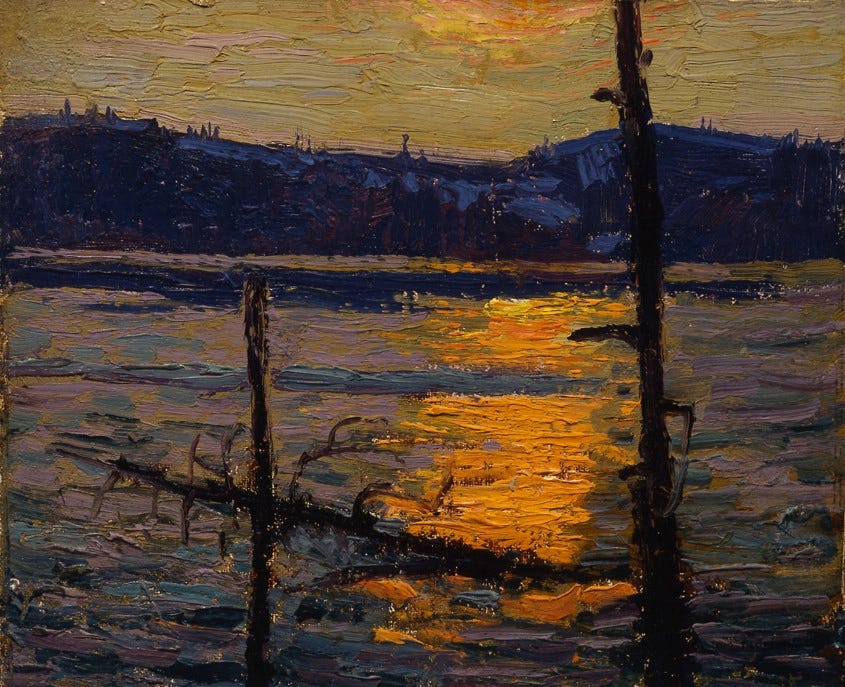
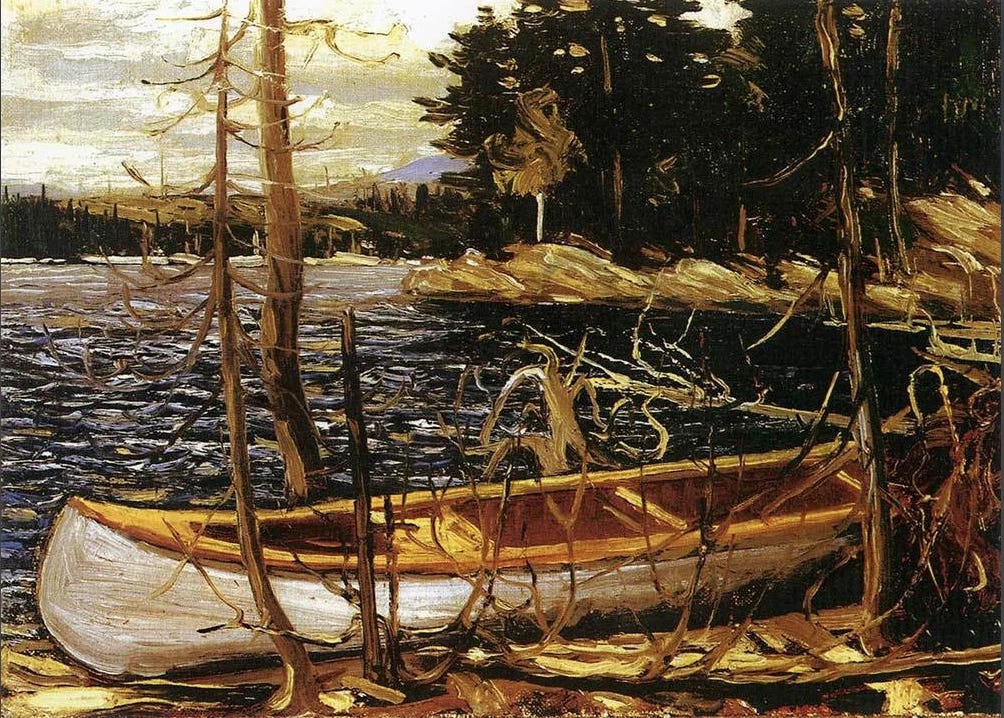
The “Algonquin National Park of Ontario” was established in 1893 by the government of Premier Oliver Mowat, but Canada’s first peoples were exploring it in their canoes long before the arrival of European hunters and trappers. In the early 20th century, it was frequented by artists like Tom Thomson, whose paintings still capture a landscape that remains largely unchanged over a century later.
I experience a feeling of placid calm in Algonquin that is difficult to describe. There is no cellular service, which means a blissful respite from messages and notifications. But, more profoundly, a distinct clarity of purpose takes hold when all the usual distractions have been removed.
Paddling is exhausting, and portaging — the process of traversing land with the oppressive weight of your gear and a canoe mounted on your shoulders — still more so. You must carefully study maps, be prepared for encounters with wildlife like bears, beavers, and moose, and be ready to deal with everything from lashing winds to roaring thunderstorms. Your body will be sore and your feet will probably get wet. A beaver dam may unexpectedly block your root and you might have to stand shoulders-deep in mirky bog water to push your canoe across. Your body will quickly get dirty, but at no point will you care. Depending on how you enter the park, you may see dozens or even hundreds of others in campgrounds. But, after a few hours of paddling, you’re unlikely to glimpse anything beyond the odd canoe at a distance or hear any voices besides those of the loons. Outside the precious twilight hours before sleep each night, there will almost always be something to do: a mighty lake to traverse, a campfire to get going, a tent to be set up, a meal to be cooked; a paddle to be thrust into the water, pulled back, lifted out, and thrust back in again.
Somehow, amid all of this activity and movement, you will improbably discover a state of clarity and peace. Algonquin is a vast and beautiful place, but it is also a refuge from the incessant noise and clutter of everyday life. When I emerge in roughly a week’s time, I expect to be exhausted, invigorated, and restored.
All of which is to say: this will be my last dispatch for at least seven days and, if you’re reading this, it means me and my companion have already pushed off toward the beckoning horizon. Do wish us luck. I’ll see you on the other side.
-Luke