

Note: I keep as much of this Substack free as I can, but writing takes time and energy and if you’re able to subscribe here at one of the paid tiers and support my work you’d be doing me a solid. If you’re unable to afford a paid subscription, consider subscribing for free or send me a message and I’ll gladly comp your subscription.
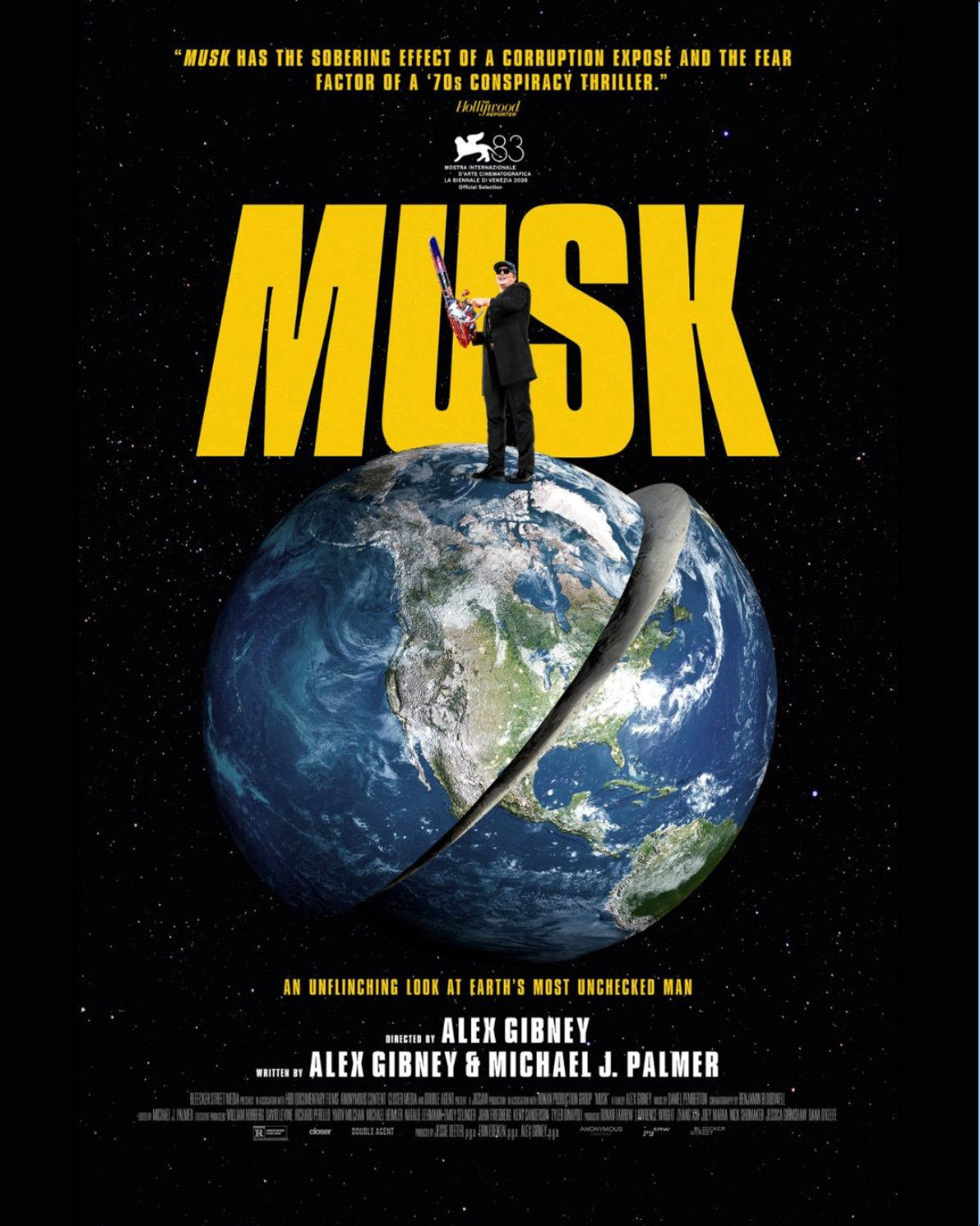
Last weekend, I finally got around to Alex Gibney’s new documentary Musk. At 235 minutes, it’s a sprawling and ambitious film most will probably enjoy taking in through a couple of sittings at home rather than seated in a theatre. Regardless, what Gibney has given us is a characteristically thoughtful and entertaining portrait of the richest and most utterly cringeworthy man on this green earth. To his credit, he is really not messing around and Musk refreshingly eschews the obtusely reverential style that has hampered even some supposedly critical accounts of its titular character to date.
If you’ve followed Musk’s trajectory, or perhaps been inspired to do so by his political exploits over the past half decade, plenty in the film will be familiar. But Gibney’s quite lengthy treatment, in assembling it all into a unified narrative, really does underscore the breathtaking extent to which Musk is both an absolutely terrible guy and a charlatan through and through.
Anyway, what follows are a few related observations on the film.
Vulgar psychoanalysis explains a lot about Musk
When you spend 4 hours in the company of Elon Musk rather than through isolated clips or tweets, the sheer extent to which his whole personality and affect are the product of aggrieved masculinity becomes impossible to ignore. As a young man, Musk was a shrimpy beta male with an overbearing dad who got bullied in school and, clearly, no amount of money or power has ever helped him get over it. Decades later, he’s still a weirdo who is trying to be James Dean and is much closer to a rich adult version of Milhouse Van Houten who’s developed a taste for leather jackets and treating women like objects. Armchair psychoanalysis can be lazy substitute for the real kind. But, hey, if the shoe fits.
Science journalism clearly needs a reckoning
Something Gibney does particularly well is drive home the sheer number of Musk prognostications — about space travel and interstellar colonization especially — that have completely failed to materialize and/or were just transparently obvious bullshit. Musk, if nothing else, has built much of his brand through hype. In one scene, for example, we see footage from a Tesla showcase in which a number of supposedly autonomous “Optimus” robots (in fact with the aid of human operators) mingle with attendees. It’s the kind of thing you’d expect a functioning media class to expose right away. But Musk has repeatedly made outlandish claims like this or engaged in obvious gimmickry and it hasn’t seemed to damage his reputation much at all.
Beyond obvious explanations like industry capture, it’s hard to know what exactly to make of mainstream media deference toward Silicon Valley. Elizabeth Holmes successfully built a vast empire by hyping a technology that never existed and Musk has now built one many orders of magnitude larger. Among other things, credulous science and tech journalism are clearly complicit in the rise of Musk.
…And so does liberalism
Something you see lots of in Musk is the titular character rubbing shoulders with the likes of Barack Obama. It’s good that Gibney included this footage but I frankly wish he’d included a whole lot more. Long before Musk’s hard right turn and conversion to the MAGA cause, he was the toast of American Democrats and widely viewed as a promising figure who deserved billions in government largesse. Institutional liberalism basically made Elon Musk and I’ve seen little evidence it’s interested in interrogating its role or rethinking things here. As recently as last year, the authors of the big centrist manifesto du jour (Derek Thompson and Ezra Klein) were still all-too happy to write this:
“Musk has become a lightning rod in debates over whether technological progress comes from public policy or private ingenuity. But he is a walking advertisement for what public will and private genius can unlock when they work together.”
Are you kidding me?
Apartheid South Africa is a critical piece of Musk’s story
Gibney includes some excellent material on Musk’s time in South Africa and notably secured an interview with his father. Among the most shocking moments in the whole film is hearing the latter calmly recounting his own lethal killing of three black men he says invaded his house — a description that concludes with chillingly well-remembered details of the ensuing streams of blood. I frankly could have used a full hour or more on Musk’s childhood in South Africa, because it’s obviously one of the single biggest things to shape him, among them: his frontier obsession, his openness to crank race science, and his receptiveness to far right narratives in general.
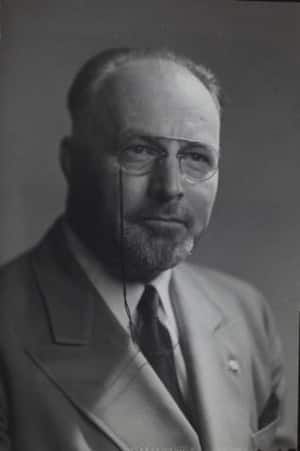
The other side of his family was incidentally connected to apartheid South Africa through his maternal grandfather (pictured above): a far right conspiracy theorist who relocated there from the Canadian Prairies in 1950 and wrote in explicitly racist terms about the “natives.” He may have died when Musk was only three but reading this (very well researched) account of his life the parallels between the two are simply impossible to ignore.
Just log the fuck off
Musk’s purchase, and subsequent dismantling, of the website formerly known as Twitter predictably and justifiably gets plenty of airtime in Gibney’s film. On this point, something else the director does well is underscore the extent to which Musk was quite literally radicalized by the addictive machinations of his own platform. From an account of one absolutely remarkable episode from February 2023, for example, we learn that Musk ordered his engineers to undertake a comprehensive rewrite of Twitter’s algorithm because his own post about the Superbowl had gotten fewer engagements than Joe Biden’s. There’s plenty more in the same vein but, regardless, even this somewhat trivial anecdote really drives home how Musk thinks about the platform as a whole. Like the worst Twitter addicts, he has a chronic case of main character syndrome and simply cannot log off. But beyond this, he also sees anything he finds personally disagreeable as proof there’s some vast conspiracy at work. Plenty who use the site clearly think some version of this. But most have never had the wealth at their disposal to impulsively buy and then rewire it in response.
A final thought
Again and again while watching this movie, I was struck by the vast disjuncture between the reality of Musk and his billing as a promethean super-genius. How and why, among the large field of potential candidates, did the forces of American capitalism conspire to make this guy the richest and most powerful capitalist in the world?
It’s only a provisional explanation but, after sitting with Gibney’s film, my tentative answer is that Musk has successfully sold a story about technology and scientific progress that many have desperately wanted to believe. For decades now, so much in politics and culture has seemed sclerotic and stilted. Common narratives of every kind have dissolved and the conventional expectations of middle class life have increasingly collapsed. Amidst all of this, Musk’s techno-futurist fables hold up the seductive promise that the wiz kids of Silicon Valley are close to solving our civilizational puzzle and that, beneath all the chaos and uncertainty of the 21st century, some dynamic force is still pushing the species forward.
It’s a powerful story. And, as Gibney’s film reminds us, it has proven to be a very dangerous one too.
Likewise... a cautionary tale, granted in a much different vein, for socialists as we pursue real power: to sell a story about govt, power & society that many have desperately wanted to believe.
Im reading Anti-Fascists Economics, cause everyone says so, but one thing stands out: Weber blames the economics not the politics, in spite of arguing economics is politics, politics is economics; "Every fascist state is a failed revolution."
Whenever I hear someone refer to Musk as a “visionary” I think of the old John Cleese sketch about ending world hunger: “Well you see, we’ll just grow a lot of food and then pass it out to everyone, and there you are!”