

In light of strong interest, I’ve also decided to extend last month’s discounted subscription offer. Until the end of April, that means you take out a full year’s subscription for just 50% the regular cost. To subscribe at the discounted rate and support my work you can click here or alternatively subscribe for free and still get the regular free posts sent right to your inbox. Enjoy.
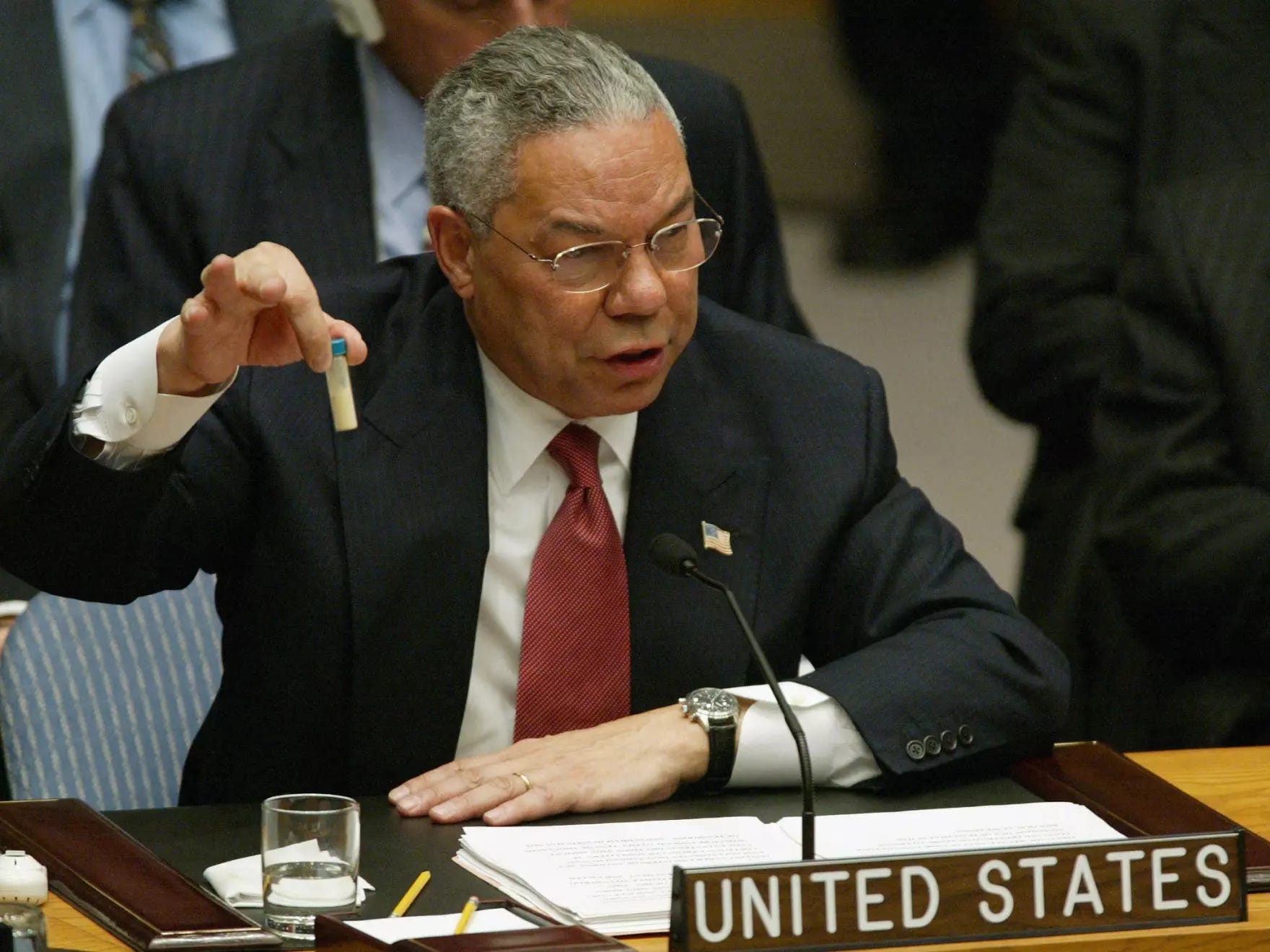
Among the most striking features of the US-Israeli war against Iran is the near total indifference of American elites in particular to public opinion. I was 14 when the Bush administration invaded Iraq and can still vividly remember the year of concerted propaganda that came beforehand. If you weren't born or were too young to remember, it's difficult to convey how aggressive this actually was. It was a campaign truly global in scope, advanced on multiple fronts, and something that showcased in pretty terrifying fashion the awesome power of the modern state and its media surrogates to manipulate public opinion. By the time the actual invasion was launched in March 2003, a majority of Americans were basically baying for blood and more than half had been convinced Saddam Hussein had been involved in 9/11.
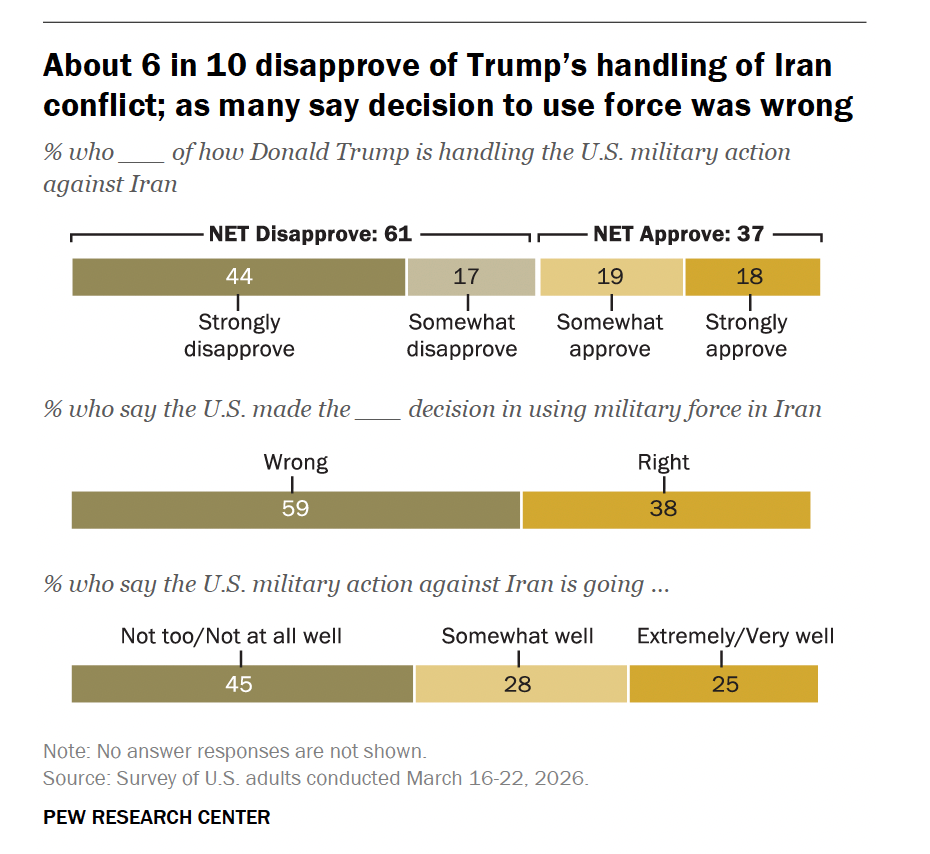
Fast forward to the present day and you see something quite different. From the outset, polls have shown there's very little support within the American public for this war. And it hasn't really mattered a lick, registering only in the tortured triangulations we've seen from people like Trump, Rubio, and Vance. Whereas the Bush administration sought to create both a humanistic pretence for its war — and one concerned with national security, weapons of mass destruction and so on — Trump and his people have barely even seemed to try.
We have, it seems, evidently moved beyond propaganda as it's traditionally been understood. The classical form of propaganda still assumed it was important, indeed necessary, to establish and maintain some kind of public legitimacy for the actions of the state or regime. That's been true in liberal democracies as well as totalitarian societies (and has plenty of precedent in pre-democratic and pre-liberal societies too).
What we have seen in Trump's otherwise quite lackadaisical messaging around the war is a concerted attempt — or rather a never-ending series of them — to prod and manipulate market behaviour, particularly when it comes to oil prices. In some instances, this looks to be straightforward case of insider trading. Here, for example, is how the New Yorker's John Cassidy recently described the aftermath of a single Trump TruthSocial post:
Since the war began, trading in the futures markets has been heavy and, sometimes, frenetic. In terms of their absolute size, the trades that took place immediately before Trump’s announcement last Monday weren’t off the charts. But the volume of trading was unusually large for the time of day: according to data collected and analyzed by Bloomberg, it was roughly nine times the average volume at the same time during the previous five days. The sudden surge in trading of stock futures was also unusual: until Trump’s post, there had been no big news. “The timing and the fact that the two trades were placed at the same time, it kind of smells like something was off,” Mike Khouw, a veteran futures trader and portfolio manager who used to run a derivatives desk at Cantor Fitzgerald, a Wall Street investment bank, told me.
Beyond this kind of rank corruption, however, I think there’s ultimately something else at work. For Trump and Vance — who, lest we forget, won a narrow victory in a cost of living election less than two years ago — the prime concerns here are financial markets and gas prices rather than public opinion vis a vis the war itself.
It’s a perfect illustration of what the market society really means. Insofar as there’s propaganda, its target constituency is not the people but Wall Street. And insofar as there’s democracy, it’s simply the democracy of consumers — who have no real power or influence as citizens but who might angrily ask to speak with the manager if prices remain too high.
Trump and most of his admin are businessmen use to seeing most humans as fungible labour, this is particularly because they arise out of the FIRE sector, where the only skills seem to be nearly universal - to be able to lie and cheat. They have no grasp of manufacturing or infrastructure, as per Trumps rage about MIC not being able to magically produce more weapons simply by turning on the spigot of money.