

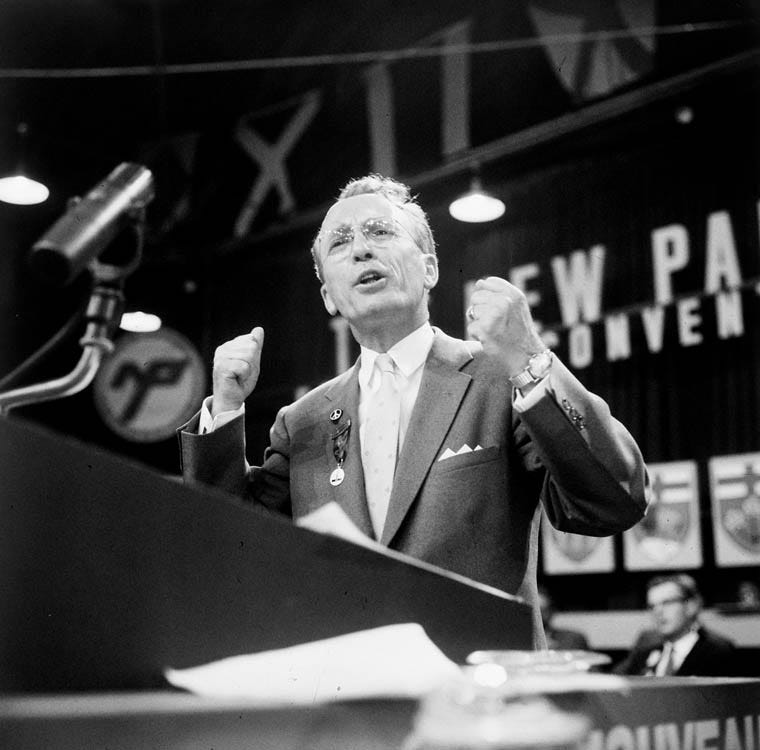
2025 represents the electoral nadir of Canadian social democracy. Reduced to just 7 seats in the House of Commons in last April’s federal election, the New Democratic Party now faces existential questions of strategy, identity, and ideology — to say nothing of several unfolding global crises and a precarious political landscape at home and abroad. Last year, my friends at the Broadbent Institute’s Perspectives Journal told me about their nascent work on a forthcoming special issue dealing with the 2025 federal election, the state of social democracy, and the future of the NDP.
Today, I’m pleased to share it with you all.
My own contribution offers an assessment of the 2025 campaign and its dynamics putting them in historical context with a view to the future of the party as it aims to rebuild. Elsewhere, you can also read the following:
The Protean Politics of Social Democracy: New Democrats at a Crossroads? – by Bryan Evans & Matt Fodor
Narrativizing Confidence and Supply: NDP Political Communications during the Supply-and-Confidence Agreement – by Dónal Gill & Ryan Mohtajolfazl
The Changing Class Basis of Canadian and Social Democratic Futures – by Matthew Polacko, Peter Graefe & Simon Kiss
A Social Democratic Canadian Foreign Policy – by Jennifer Pedersen & Simon Black
Labour and the NDP: Revisiting the Past, Looking to the Future – by Larry Savage (incidentally, no relation!)
OPINION: NDP Leadership Race Should Look to History on How to Change Canada – by, Clement Nocos & Dave McGrane
To give you a general sense of scope and what you’ll find inside, the editors frame the issue and its remit this way:
As difficult as it may be, any analysis of the recent electoral fortunes of the federal NDP must attempt to parse factors unique to a particular election from longer term dynamics—both internal and external—impacting the viability of the party, from those that characterize the impasse of social democratic politics globally. Is Canadian social democracy at such a crossroads, between global Third Way trends and a socialist revival demonstrated by electoral gains in Latin America and New York City?
As an aside, I want to commend Brock University’s Simon Black and Clement Nocos of the Broadbent Institute for their excellent work in putting this all together. For too long, Canada’s socialist and social democratic left has lacked this kind of intellectually rich and ideologically serious engagement with difficult questions (insofar as that has existed, it’s often been confined to academic settings). When Ed Broadbent founded the Institute in 2011, he hoped it could serve as both a source of ideas for the Canadian left and a bridge between the party, movement, and labour; ideologically grounded, but institutionally separate. This kind of work, I think, was exactly what he had in mind and, were he still with us, I’m sure Ed would be pleased.
Finally, those who read my contribution will notice it says very little about the NDP’s ongoing leadership race — which obviously represents the most urgent and timely question facing the party. Needless to say, I have been following it closely and will have a separate piece dealing with it directly up soon. Stay tuned.
I appreciate this post.
But Acronyms have now reached critical mass. I just finished reading a post by Avigail Abarbanel about Trump’s NPD, (Narcissistic Personality Disorder) and now I’ve got AOC. (That’s Acronym Overload Confusion, nothing to do with the congresswoman.)
People are struggling to stay afloat while the Westons and the Rogers get richer and richer.
Carney has chosen to side with the latter by cancelling the move to fairer taxation of investment profits, and dismissing any calls for price controls (even if they have worked in Switzerland), and we all know what PP would do.
I expect this to be responsible for the small uptick in NDP polling over the last month, hopefully that is the only the beginning of a trend until the next election.