

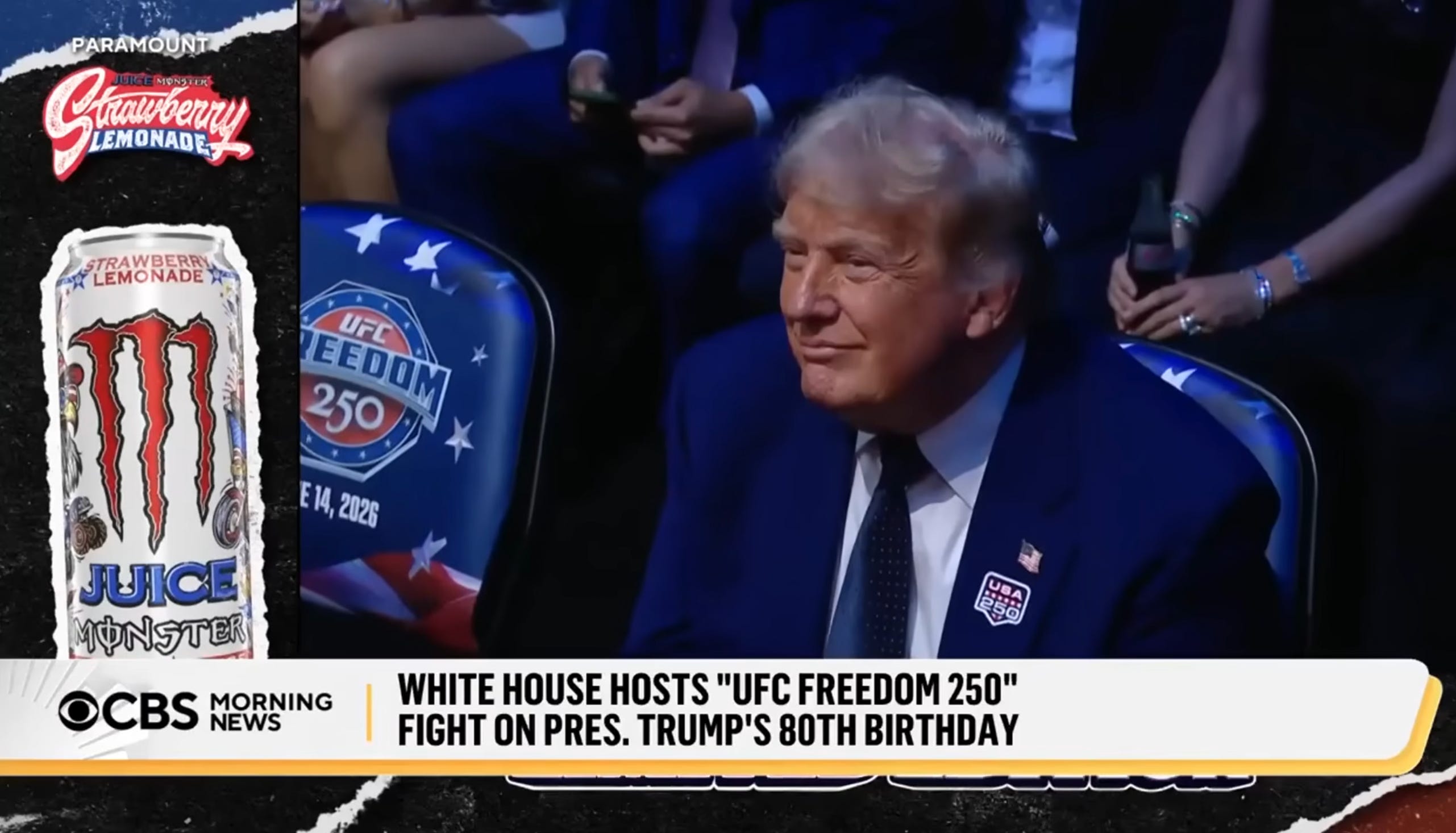
A version of the essay below was originally published in Jacobin on October 28, 2020 — just before Donald Trump’s defeat in that year’s presidential election. But I think it pairs especially well with events at the White House last weekend and that, if anything, the passage of time has only affirmed the argument. Since it’s now more than five years old, I would only add that the Biden years ultimately reinforced and intensified the phenomenon the piece describes. In any case, I hope you all enjoy.
-Luke
Note: I keep as much of this Substack free as I can, but writing takes time and energy and if you’re able to subscribe here at one of the paid tiers and support my work you’d be doing me a solid. If you’re unable to afford a paid subscription, consider subscribing for free or send me a message and I’ll comp your subscription.
By the mid-eighteenth-century, the French system of absolutist monarchy painstakingly constructed during the reign of Louis XIV was showing serious signs of decay.
Humiliations in foreign policy, domestic grain shortages, and clashes with the landed nobility all served to discredit the regime of the Sun King’s hapless successor. But decades before the national debt crisis that precipitated the revolutionary overthrow of the Bourbons, the French state was already facing a catastrophic loss of legitimacy exemplified by the royal figurehead himself. Domestic failures and military defeats notwithstanding, Louis XV’s private life and sexual indiscretions also became the stuff of eighteenth-century tabloid fodder.
The personal compounding the political, the king proved increasingly unable to project the aura of divinity from which the country’s entire system of government drew its authority — gradually withdrawing from the public rites and religious ceremonies that consecrated his rule. After 1739, when his mistresses became visible at court, Louis discontinued the longstanding practice of touching people with scrofula. By 1750, he had ceased to attend grand masses or conduct ceremonial entrées to Paris.
Literally and figuratively, the king had lost the royal touch, and with it a critical link to the people he ruled. In subsequent decades, the process of desacralization was accelerated by a boom in subversive literature that denigrated the royal court and depicted leading figures like Louis XVI and Marie Antoinette as sexually depraved perverts.1 Amid intellectual ferment, economic stagnation, and unrelenting political turmoil, French subjects, as historian Sarah Maza puts it, experienced an “acute sense of moral void and social dissolution,” feeling “dangerously adrift in a world” without its “traditional sacred centre.”
At precisely the moment its ability to competently execute basic state functions was thrown into crisis, the symbolic legitimacy of the Bourbon dynasty — and the system over which it presided — had collapsed.
****
“He became president of the United States in that moment, period . . . For people who had been hoping he would become unifying, hoping that he might find some way to become presidential, they should be happy with that moment.”
The occasion was late February 2017, and Donald J. Trump, former host of NBC’s The Apprentice, had just given his inaugural State of the Union address as president of the United States. The remark, belonging to liberal CNN commentator and former Obama administration special adviser Van Jones, referred to a moment in the speech when Trump had recognized a Navy SEAL killed during a raid in Yemen and paid tribute to his attending widow.
While this was clearly insipid pundit babble, Jones’s comment had an accidental eloquence in context. The Yemen operation had, after all, been Trump’s first as commander in chief of America’s military. In addition to costing SEAL William Ryan Owens his life, fourteen people dubbed “militants” by authorities at the Pentagon had been killed alongside some ten women and children. Worse still, at least from the point of view of some mainstream commentators, the raid had been deemed a military failure, and Trump had off-loaded responsibility for Owens’s death onto his generals.
In applauding the president’s tribute, Jones was thus signalling his relief that, in spite of everything, the country’s unlikely new leader could look sufficiently “presidential” while presiding over imperial slaughter. Having decried the result of the 2016 election as a “whitelash against a changing country,” he would now find at least momentary solace in his own strained assurance that, however fleetingly, Trump appeared capable of executing the symbolic function demanded of a US president.
Notwithstanding Jones’s justly mocked comment, Trump never succeeded in projecting the “presidential” aura that so many traumatized denizens of official Washington had hoped for in the early months of his first administration. Instead, Trump has happily continued the postmodern carnival barker routine he first pioneered on network TV: eagerly insulting opponents, attacking supposedly nonpartisan figures, and transgressing against norms of civility on a daily basis. (To the particular ire of his liberal and centrist critics, he has even continued to binge-watch cable news and post in his own, now-iconic vernacular.)
Since the 2016 election, the threat posed by Trump to the office and reputation of the presidency has been a major preoccupation of the bipartisan backlash against him; moral and ideological outrage revealingly taking a back seat to the endless fixation with his personality and temperament. Both Hillary Clinton and Jeb Bush, two of Trump’s loudest and least effective political opponents, opted to make character the central theme of their campaigns, and their defeats somehow did little to dissuade others from emulating their approach. While the rank incompetence of Trump’s opponents is certainly one explanation, another is that America’s elite quite viscerally recognizes the symbolic disruption wrought by his continued presence in the Oval Office.
As the symbol that ultimately consecrates American’s political order, the presidency necessarily depends on myths that must be maintained for its semiotic function to persist: myths of personal virtue, of executive competence and, above all, of a democratic meritocracy in which the very best inevitably rise to the top. If mainstream outrage toward Trump has often expressed itself in the language of propriety, a major subtext has always been a deeper sense that the presidency as such will be diminished — and, with it, the capacity of the system to maintain itself; his capture of the office working to overturn each and every one of its foundational myths.
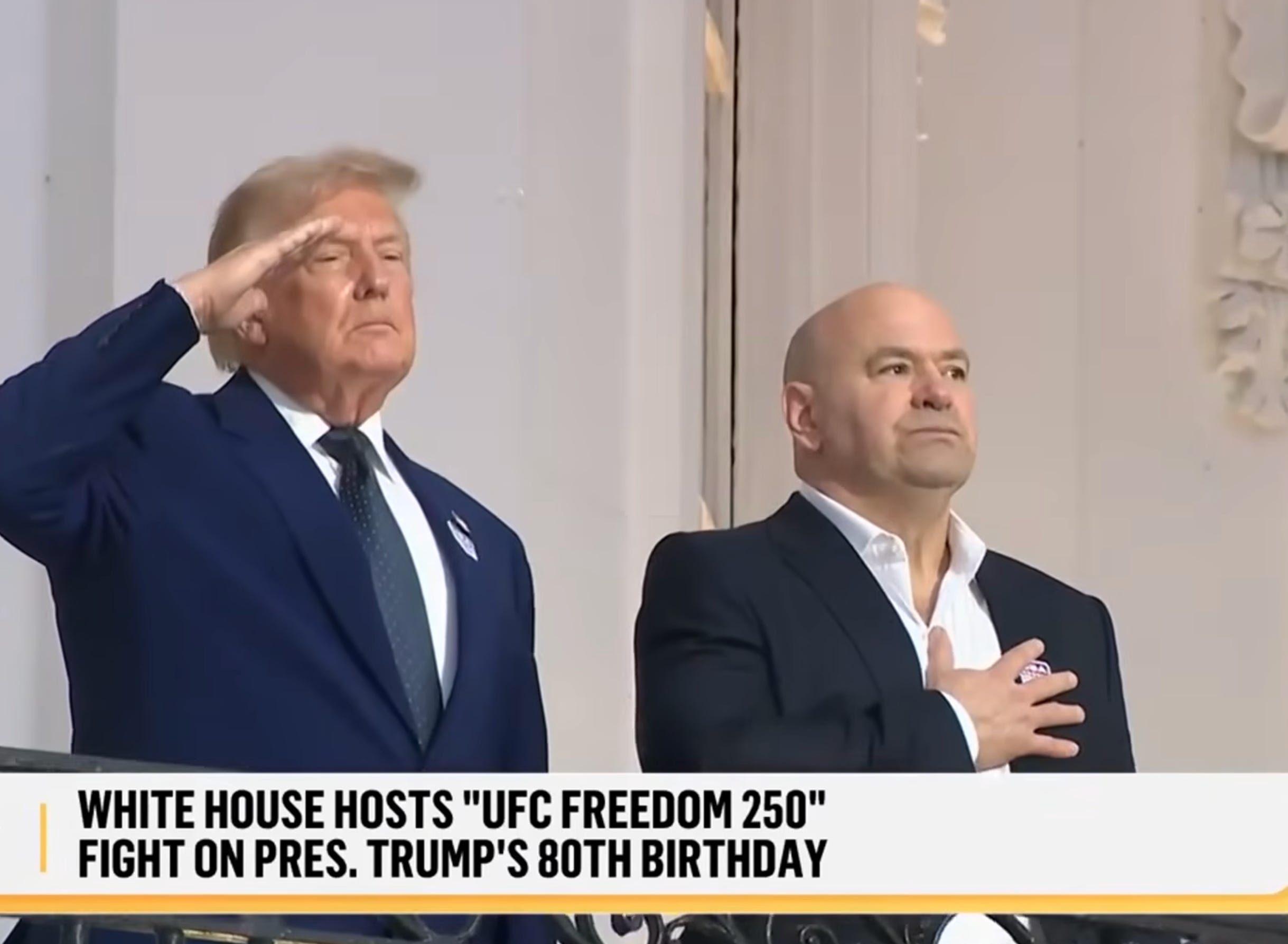
Managerial competence? Before 2016, Trump had never wielded political power and was known for a string of crash-and-burn business ventures that had made his name a punchline in polite society. Democracy? Trump is someone who visibly relishes hierarchy and partly became famous by playing a cruel boss on TV. Personal virtue? You’d be hard-pressed to imagine a more cruelly vindictive and morally depraved person or find anyone whose private life has inspired more tabloid fodder. Trump has finally exposed the lie of meritocracy in twenty-first-century America by demonstrating that wealth does, in fact, supersede everything else. If someone like him can become president, then the likes of competence, professionalism, and personal virtue are clearly not prerequisites for those in high office.
And if the country’s imperial figurehead can really be this transparent huckster of a man, the average person may start to wonder whether the whole thing is a con. As Jodi Dean wrote in 2016:
Donald Trump cuts through the ideological haze of American politics and exposes its underlying truth…Where other candidates appeal to a fictitious unity or pretense of moral integrity, he displays the power of inequality. Money buys access — why deny it?…This expression demonstrates the truth of economic inequality: civility is for the middle class, a normative container for the rage of the dispossessed and the contempt of the dispossessors. The .1 % need not pretend to care.
Trump’s symbolic disruption of the presidency thus reflects the deeper dysfunction of a society whose foundational myths have become increasingly distant and alien to all but a privileged few. Amid imperial decline, falling living standards, cultural polarization, incessant economic crisis, and the paralysis of political institutions, American elites have continued to preach the same old fables of national exceptionalism, perpetual progress, and a brighter future awaiting every citizen just over the next horizon. In the figure of Joe Biden, Democrats, liberals, and their conservative allies hope to restore a pristine image to the office tarnished by Donald Trump, incorrectly holding him to be the cause of the country’s ills rather than a mere symptom of them.
Should Biden prevail on November 3, he may briefly assume the symbolic aura demanded by America’s bipartisan establishment. Certain to take office in a country even sicker than the one that produced Donald Trump, the sheen is unlikely to last for long.
For more on this, read Amber Frost’s excellent 2016 essay for Current Affairs.
Interesting comparison.
The appalling neologism of the title presumably means 'profaned' but could equally mean 'disconnected the hips from the pelvis'. Either could describe what that bloke has done to an office which Americans have seemed to revere in the teeth of the evidence for as long as I can remember. Whether that triumph of patriotism over fact can survive this degree of corruption domestically one can only wait and find out but it looks like the rest of the world has largely woken up to the decline of American authority and the opportunity handed to China after the Iran fiasco.